
We are reviving an old article about historic windows since we have received so many questions about windows this week. I wrote this back in October 2007 – remember to look in the category section of the blog under “historic homes” or “architecture” for informative articles that may help you with restoration of historic homes or even remodeling of your existing one. We always appreciate your feedback! And remember we are here to serve all of your Miami real estate needs – especially if you are buying or selling historic homes! It’s our passion and you’ll know why from the minute I step into a historic property.
We ARE Miami’s Historic + Architecture REALTORS!“““

You are going to think I am crazy for writing an article about the correct use of windows. But you need to know that windows are my pet peeve. Windows are a key element in a building’s architecture, and the incorrect use of a window can ruin a building’s facade.
When doing the Miami Real Estate thing I am always shocked at what I see. I drive around every day looking at Miami Architecture shaking my head. You see Spanish Mediterranean homes with Colonial windows, Colonial homes with casement windows, or Mid-century modern homes with single-hung windows. This drives me absolutely crazy, so instead of complaining, I’ll try to explain some basics.
Vitruvius, known as the first Roman architect to have written on his field, always talked about architecture as an imitation of nature, and ultimately defined the Vitruvian Man (drawn by Leonardo da Vinci). The Vitruvian Man, represents perfect human proportions and fundamental geometric patterns of the cosmic order. I will not go into detail about the human proportions but will only tell you that the first windows were vertical in nature made to represent the human body, or better yet, were designed according to human proportions.
I have sketched a common window to show what proportions are about – notice the vertical nature of the window. Different styles of architecture call for different window proportions. And although I’m not going into detail about what type of window is appropriate for what type of architecture, my purpose is to help you “see” and discern the different proportions. 
You have no idea how good it feels when friends and loved ones start noticing things that they really never paid attention to.
It’s great that Rick can go into a house now, with his “accountant eye” and say, “too bad they replaced the windows with the wrong type”. It’s a big YESSSssss in my book.
Here are 3 sketches of the same house with different types of windows – please excuse my primitive pen and inks, but I think it helps to make a point. The house is a small scaled Mediterranean Revival typical of the 1920’s in South Florida. One of the three window types is correct for the style. 
Sketch “A” shows the house with a horizontal awning window.
Sketch “B” shows the house with a vertical casement window.
Sketch “C” shows the house with a colonial window.
The differences may be a bit subtle for the untrained eye, but the correct use for a Mediterranean Revival home is the casement window. If we want to go into detail, the proportion of the window lights and the placement of the muntins is also very important. But I would much rather see a plain casement without muntins, than the other 2 applications.
So what’s the purpose of this blog and how does it apply to you? Start looking at windows, notice differences, that way when you are ready to replace a window in your home, you will know which type to use.
Please don’t ask window companies, most of them will not care what you use and which window type is appropriate; when in doubt, ask a professional. There are plenty of architects that do consulting and would be glad to answer questions. There are also historic boards throughout that may be able to help you. If you have a question about windows, let me know……I’ll try my best to answer.
Comments
32 responses to “Please don’t use the wrong window”
I live in Miami Beach in a beautiful 1928 home. All my bathrooms are original except for one, that looks to be from the 70’s. I am planning to renovate this bathroom in the style of the house. All of the original bathrooms have tile floors (4X4″ tiles in one color). I recently saw the original DeGarmo house in Coconut Grove, and fell in love with the Cuban tile flooring. Do you think I can use that type of flooring in that particular bathroom, making it the only one in the house like that, or should I stick with the same type of flooring as in the other bathrooms?
Thanks in advance,
Esther Rubin
Hi Esther, my original gut reaction would be to think of uniformity. I have to think as a Realtor and tell you that for resale value, there’s nothing like keeping your bathrooms and tile the same or very similar. My opinion would vary if we were talking about a powder room where you could afford to be different and make a statement using finishes from the period, funky lamps and a great vanity.
1928 Spanish Mediterranean bathroom floor tile would have normally been of a honeycomb pattern and usually black and white but in cities like Morningside and Coral Gables, you also see the colorful 4X4’s
hope that helps!
Hi Ines:
Great article on proper windows for med revival homes. I was curious to know what you would suggest as correct entry way doors on these historic homes. I have noticed many of these houses in the upper east side have 1970’s “Burt Reynolds” era doors that don’t seem to match. Then again a Spanish Colonial dark door with a rought iron hardware might be overkill. I would be interested to hear your thoughts on the matter – thanks
Thank you Leo,
There is not an “unwritten rule” about front doors for Mediterranean Revival homes, but I can tell you that most of the houses I have visited and studied usually have a heavy solid wood door (usually with vertical grooves and possibly a rectangular window on upper center).
There are some homes that have heavy wrought iron details – from hardware to metal knots to door knockers. It’s easy to go overboard, simplicity is always key.
Hi Ines, I am so with you on this one! This is a great explanation with excellent visuals – I’m really envious of your artistic skills. Window replacement is one of the banes of my existence. And another personal pet peeve are the new houses with windows of half a dozen styles – and no rhyme or reason – often accompanied by three or four different types of siding. Eek!
Liz
Leo – just visited a Walter DeGarmo in Miami Shores and took a photo of the door viewer for you http://www.flickr.com/photos/miamism/3628733405/
Liz, windows can make or break a home – I wish people would be more sensitive to scale and proportions, but it’s all about educating the “common eye”. Thank God for not doing siding in South Florida 🙂
Ines – I think that windows are the eyes into the soul of the home. Although I cannot tell WHY a window may be “wrong” … I can definitely tell when they are not right. This is a truly wonderful and educational post for both the Miami real estate market … and even mine!
Thanks Mariana – windows have always been my pet peeve and love to see people interested in learning why something may not look quite right – in Miami it’s all about “hurricane impact” windows now….people forget that you can achieve both aesthetic appropriateness and address safety concerns, they don’t need to be separate.
Very useful article. Are there general rules for height to width proportions for double hung windows? We are going to replace our double hungs (6 over 6 light pattern) with a height to width of 1.8 with hopefully a slightly larger sized window, but with a 4 over 1 pattern. Do we want to keep 1.8 h to w? If we go wider the 4 lites on the top start to get a bit fatter.
Ethan, I need more information to be able to help you – the year and style of the house would help as well as location and exterior materials. Double hungs were used by a variety of styles and if you have lights, then it’s usually colonial (the actual lights are square). The best bet if for you to try to get the original plans for the house to see what the architect intentions were – if you are changing the size of the opening, then all bets are off.
The overall look of the window should be a rectangular (up and down) – broken up into 2 squares and then those broken up into other smaller squares (vitruvian proportions at its best).
The house was originally a Garrison Colonial built in 1968, but had a 1984 remodel adding a larger covered porch and a bump out that pretty much eliminated the “overbite” of the garrison. Windows are currently 6 over 6 but we hope to change to 4 over 1, and possibly a bit larger but same height to width ratio. Siding is clapboard, and the shutters presently on will likely be removed. Not sure there was brilliant architectural input on the original house!
Ethan – the 6 over 6 has a very particular look to it and changing to a 4 over 1 will totally change the look of the facade – just make sure you are ok with that. My pet peeve is light configuration and eliminating muntins from the double hungs may not give you the desired outcome. Sometimes drawing the facade with the change of proportions helps.
I want to change the windows and glass doors leading to the patio in my Miami Springs Mediterranean Revival.
I want to install impact windows and doors instead of installing hurricane shutters.
Any ideas where to find impact casement windows at a reasonable prize? What’s the correct style of glass patio doors for this house?
The house underwent a previous renovation where colonial windows were installed and it has French patio doors.
Thank you for your help,
Leyda
Leyda,
There are a couple of local window companies that make metal casement impact windows (PGT is one of them). I do, however, love Pella windows and doors- they give you the option of an exterior metal cladding with a wood interior that can be stained or painted.
Contact Pella, because they may surprise you with their pricing and usually recommend installers with great workmanship.
Colonial windows are obviously the wrong proportion for your home, my advice is to get the original blue prints (may be available in The City of Miami Springs) where you will be able to see the right proportion for the doors, windows, and muntins. If all else fails, I rather see a casement window with no muntins (no lights), than the wrong amount or wrong proportions.
As for patio doors – I am not looking at the facade drawings of your home and if it was an addition which is out of period, French doors (with right proportions will be appropriate). The same applies to doors as windows – I rather see a French door with no lights, than with the wrong amount of lights.
Thanks for the comment and good luck with the pavers and windows.
Ines,
Your right, we supply a wide variety of replacement windows and doors an due to the new regulations and ‘tax opportunities’ we have been faced with the dilemma of how do you replace beautiful windows and doors in homes built in the 1920’s and 1939’s. Fortunately many of our suppliers are providing’kits’ which meet codes and, with ‘creative carpentry’ look beautiful. We just finished replacing over 40 windows and doors in a beach house (built in 1919) with our impact resistant and ‘green’ offerings and they look great.
please let me know if anyone would like to see pictures.
I agree here with the main post (((Please don’t use the wrong window))) – Home owners need to know before hand what style and name brand prior to installation of any windows ….. lols
Any advice on single hung window if casements are not in the budget? 1940s home in gables. Has ugly colonials. Changing to impact. Casement vs single hung.
Nicole, the problem with single hung is that it divides an elongated window into 2 parts and breaks the original proportion of the window. Look at original windows and what the proportions were ….if window was separated vertically, the single hung will not work, but a slider may.
Let me know if that helps.
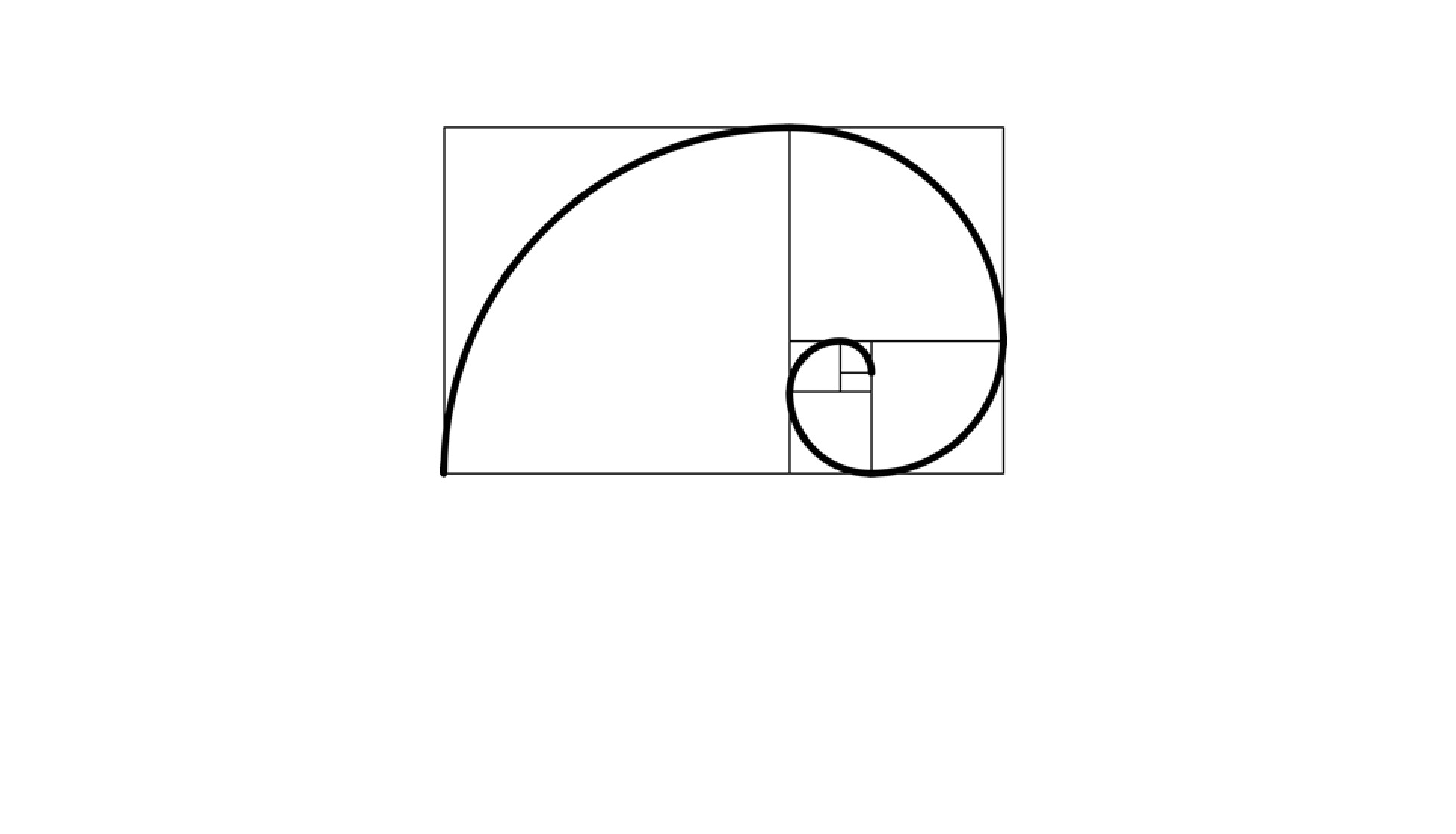
Yes – windows are very important – they are the eyes of the house and sadly homeowners are being brain-washed into believing that they need to replace their windows. The improved insulation factor with a replacement is a scam. No one ever thinks about the importance of the design details of the window, the golden rectangle, and the proportion of the casing. Window manufacturers don’t care so it is important to get the word out and educate the homeowner. Many architects don’t even follow these rules.
I explain this in my website http://www.OldHouseGuy.com/windows
At the bottom of the page I have a link to historic window restorers. If you have a qualified referral, please submit the info. We can all help save our older buildings this way before homeowners opt for plastic windows.
Ken
Hi Ken,
I don’t usually allow blatant advertising on my blog posts (it’s in our comment policy) but think your information is interesting. I’d like to hear more particulars about window restorations for South Florida since we have completely different weather conditions than up north. Our problem is humidity and scorching sun. Replacements here are usually metal, not vinyl.
I’m in the process of replacing all doors and windows of a1919 Moorish/mediterranian house. I spoke with the Historic planners and was advised to get white 6 over 1 or 3 over one. I thought a bronze finish would be more in keeping with the home. Please advise! Lisa
Hi Lisa, my recommendation is to try to find the original drawings (facades) of the house to see what the proportion of the windows was. I’m sure the historic board (planners) will guide you in the right direction. Windows were probably made out of wood in 1919 and painted to a particular color scheme to the house. Bronze or brown windows always give the house a nice touch and re much more durable than wood, so I think you are on the right path.
Good luck with the restoration!
Please don’t use the wrong window in your Med Revival Miami Beach home http://t.co/I2eax7xt1G via @ines
Ines,
Elsa and I are looking to upgrade our windows to impact resistant windows and I have been doing a ton of research – frankly I am not finding much of anything that looks really great out there – so anyway – was doing a search on the web and found your blog! Small world! 🙂
You know our house – what do you think?
Patrice
Hi Patrice! So glad you found the blog. My first advice would be to look at the original architectural drawings of your house to see the proportions used by the architect. I’m sure you have facade drawings in those plans. Even if you decide not to use muntins and do typical plain windows, I would do casements on your front facade and they would have to be 2 casements (vertical) side by side on each window opening. Would be happy to look at the drawings with you and give you my opinion.
I agree with the casement window looks – and I am thinking clean windows – no mullions – but really struggling with what is available – vinyl? aluminum?
Patrice, neither vinyl nor aluminum would have been historically correct, so you should not struggle. Pick the one that makes the most sense for your budget and for durability. In my opinion, once you get proportions correctly, modernizing materials so you don’t need to struggle against our weather, makes total sense.
Hi Thank you so much for this article and the others you have written. It is wonderful to find a resource! We have just purchased a 1925 Mediterranean Revival home in Miami Beach and are replacing the windows – hopefully with historically accurate ones. Aside from casement, are there any other important factors? For example, is there a standard formula for the spacing of muntins? I have an old photo of the house, but apparently the front was originally a screened in porch, which has since been enclosed, so the picture isn’t proving much guidance. Thanks again! Marian
Hi Marian, So glad to hear that you found the article helpful and congrats on your home purchase!! Too bad we didn’t represent you since we offer consulting services to our clients at no cost!! The spacing of the muntins is about proportion and has to do with human proportions and golden ratio. Pay attention to the existing windows and try to mimic those- DO NOT DO SQUARE PROPORTIONS!!! Good luck and think of us for your next home purchase or if you know of anyone looking to buy historic homes.
We have a mid century ranch in Tampa that has Miami aluminum windows, dual and triple pane awning type openings. We would like to upgrade to double pane, impact resistant windows but can’t find any that replicate the 50’s aluminum style. The mullions and muttins are heavier in the new windows. Do you know of a brand that people are using that look period?
Hi Don, first, thanks for reading miamism. Most window companies are coming up with an aluminum option. PGT has one – of course they will not be awning, but simple casements will do the trick since the look is more horizontal. Hope that helps and good luck.